Where Business Advantage Comes From in the Age of AI
AI made software cheap to produce, which means the software itself is no longer the moat. Four advantages still compound: speed of the full loop, anything anchored to the physical world, data that improves with use, and owning one narrow problem end to end.
For a long time, the software was the moat. If you built the thing, you had something competitors would need months and a team to copy.
AI changed the math. A working prototype is now hours of effort, not quarters. Features that used to be a roadmap are an afternoon. When the cost of producing software falls this far, the software stops being the advantage. Everyone can produce it.
That sounds like bad news for anyone trying to build a defensible business. It is actually clarifying. When one kind of advantage evaporates, it tells you exactly where the durable ones were hiding all along.
TakeawayWhen software becomes cheap to produce, the code stops being the moat. What surrounds the code becomes the moat.
Four advantages still compound when the build itself is commoditized. They are worth knowing whether you sell software, services, or something physical, because the same logic decides who wins.
1. Speed of the Whole Loop
Speed is the most underrated advantage, and most people picture the wrong kind. They think it means typing faster or shipping a feature sooner. The advantage that matters is compressing the full loop: idea, build, put it in front of a real person, learn what was wrong, change it.
A business that runs that loop in two days learns ten times before a business on a quarterly cycle learns once. It gets more contact with reality per unit of time, and contact with reality is where every good decision actually comes from.
This is why the prototype matters more than the plan. A demo someone can click teaches you something a document never will. AI makes the demo cheap, so the loop gets shorter, so the learning compounds. The gap between a fast operator and a slow one widens every cycle.
- Measured in features shipped
- Plans are long, demos are rare
- Feedback arrives after launch
- One big bet per quarter
- Learns slowly, corrects late
- Measured in cycles of real feedback
- A clickable demo for every idea
- Feedback arrives before commitment
- Many small bets per month
- Learns fast, corrects early
If your competitor learns from real users ten times before you learn once, the feature gap is not the problem. The learning gap is.
2. Anything Anchored to the Physical World
AI lives in text, code, and pixels. It is extraordinary there. It has almost no purchase on the physical world: the warehouse, the job site, the piece of equipment, the handshake, the regulated process that requires a licensed human to sign.
So anything rooted in atoms rather than bits gets more defensible as the digital layer gets cheaper. A company that installs and services equipment, holds physical inventory, owns relationships built over years, or operates inside a regulated trade has a moat that a model cannot generate. The software around that business can be copied in an afternoon. The trucks, the technicians, the permits, and the trust cannot.
This flips a common worry. Owners of physical, operational businesses often assume AI leaves them behind. The opposite is true. They hold the scarce asset. AI is the cheap layer they can now add on top, to schedule the trucks better, quote faster, and catch problems earlier, without giving up the thing that was always hard to replicate.
- Equipment, inventory, or infrastructure you own and operate
- A licensed or regulated process that legally requires a human
- On-the-ground presence: service, installation, logistics, repair
- Relationships and reputation built over years in a local market
- Proprietary access to a place, a supply, or a distribution channel
If your advantage is on this list, AI is a multiplier on top of it, not a threat to it. The right move is to wrap cheap software around the expensive physical asset, not to compete on software alone.
TakeawayWhen bits get cheap, atoms get valuable. The parts of a business that touch the physical world are the parts AI cannot copy.
3. Data That Improves With Use
Everyone has data. Few have data that compounds. The difference is whether the system gets measurably better every time it runs.
A static export of last year's numbers is not a moat. Anyone can buy a similar one. The moat is a workflow that captures its own outcomes: every decision, every correction a human made, every result that came back good or bad, fed into the next version. After a year of that, you have a record of how your specific business actually behaves that no competitor can buy, because it was generated by running your operation, not someone else's.
AI makes this advantage sharper, because models turn that accumulated history into better suggestions, better defaults, and earlier warnings. The company that wired its workflows to learn two years ago is now operating on compounding interest. The company that just bolted a chatbot onto static data is not.
- Every run records its outcome
- Human corrections become training signal
- Defaults and suggestions sharpen over time
- The data describes your real operation
- The gap with competitors widens monthly
- Data sits in static exports
- Corrections are lost after each task
- The system performs the same on day 500 as day 1
- The data could belong to anyone
- No advantage accrues from use
Everyone has data. The advantage belongs to whoever can say their data is worth more this quarter than last, because the system kept running.
4. Owning One Narrow Problem End to End
When software is expensive to build, breadth wins, because building anything at all is hard and a platform spreads that cost. When software is cheap to build, breadth stops being a defense. A general platform is the easiest thing to clone, because general is exactly what AI is good at producing.
Depth is harder to copy. Pick one painful, specific workflow in one kind of business, and own it completely: the edge cases, the exceptions, the regulatory wrinkles, the way the data is actually messy in that domain. A generalist tool handles the happy path. An owner of the narrow problem handles the parts that make people trust it with real work.
This is good news for small and focused operators and hard news for sprawling platforms. The advantage now goes to whoever understands one problem more deeply than anyone else, and AI lets a small operator reach that depth quickly in a domain they actually know.
- Covers many workflows shallowly
- Wins when building is expensive
- Easy to clone with cheap AI
- Handles the happy path
- Competes on feature count
- Covers one workflow completely
- Wins when building is cheap
- Hard to clone without the domain depth
- Handles the exceptions that matter
- Competes on trust in real conditions
What Stopped Being an Advantage
It helps to name the things people still treat as moats that AI quietly dissolved.
- Having an app. Producing software is now cheap, so the app alone defends nothing.
- A long feature list. Features are the easiest thing to reproduce.
- A clever interface. Polish is a weekend, not a wall.
- Being first to a generic idea, with no data, depth, or physical anchor underneath it.
None of this means the software stops mattering. You still need it. A business without the cheap layer is slower, blinder, and harder to deal with than one that has it. The point is narrower: building it is no longer the hard part, and it is no longer the defensible part. So get it built fast, get it built cheap, and spend the energy you save on the moat underneath.
Where Is Your Advantage?
Which of these does your business actually hold?
Most durable businesses have at least one. The strongest have several stacked together.
Build on What Stays Scarce
AI moved where advantage lives. It left the code and settled into the things the code sits on: how fast you learn, what you hold in the physical world, what your data knows about your own operation, and how deeply you own one problem.
The cheap part got cheaper. Build on the parts that stay scarce.
Earlier in this series: how to decide which workflow to automate first, and how to turn the backlog behind that workflow into an agent queue.
AI Workflow Ranking: what to automate firstAgent Queues: how AI turns backlogs into systems
David Johnsen
Founder, CloudBuddy Solutions
Want to automate a workflow in your business?
Tell us what your team needs help with. We’ll work through a starting point together.
Put us to workMore posts

Agent Queues: How AI Turns Backlogs Into Systems
The easiest way to understand useful AI at work is to look at the queue: the inbox, ticket list, approval pile, lead backlog, or report stack where work waits for the next step.

Fable 5: The Mythos Model Just Went Public
Anthropic released Fable 5 today, a Mythos-class model anyone with an API key can use. I ran it head-to-head against Opus 4.8 and Sonnet 4.6 on launch day, from quick puzzles to a 150,000-line codebase audit. The frontier difference shows up exactly where you'd expect, and not where you wouldn't.

AI Workflow Ranking: What to Automate First
Most AI projects fail at the first decision: which workflow to build for. AI Workflow Ranking is a repeatable way to score every workflow on readiness and value, then pick the first build that actually pays off.
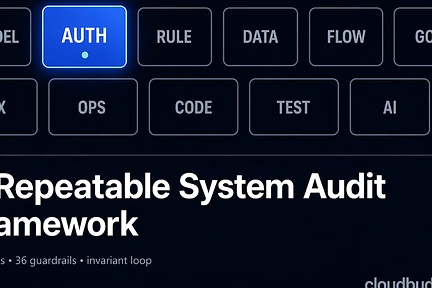
A Repeatable System Audit Framework for Production Software
A repeatable framework for auditing a SaaS codebase at scale. A set of audit tracks you select and adapt to your system, an invariants loop that stops regressions, and a verification cycle that makes each audit cheaper than the last. One recent application surfaced hundreds of findings and promoted 36 invariants to code-level guardrails.
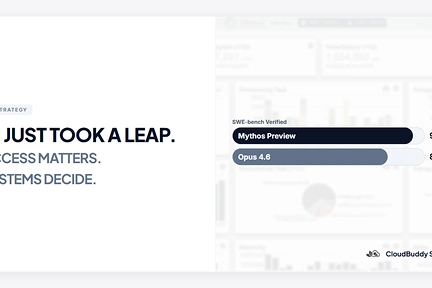
AI Just Took a Leap. Access Is Becoming a New Advantage.
Anthropic released Mythos Preview to a closed group of organizations. The capability leap is real, but the access model may matter just as much. As AI shifts from an equalizer to a gated advantage, the teams that win will be the ones that can turn that capability into working systems.

Claude Code Leaked. I Looked Under the Hood.
Claude Code CLI accidentally exposed part of its codebase. I pulled the package and looked under the hood. The direction is clear: AI agents are becoming systems.

I Rebuilt My Company Site From My Phone (At the Gym)
What it actually looks like to work with remote AI agents. What worked, what didn't, and how Claude Dispatch compares to our custom AI tools.