The One File I Open Every Monday to Decide What to Work On
Every Monday I open one file and it tells me which deal has gone quiet, which fact about the business is out of date, and what I owe someone this week. Here is the rule that keeps it from rotting.
Every Monday I open one file.
It tells me which deal has gone quiet, which fact about the business is out of date, and what I owe someone this week. I read it for a few minutes, pick the two or three things that matter, and close it. Then I start working.
I stopped trying to hold the whole company in my head. Pipeline, partners, prices, promises, the thing I said I would send someone three weeks ago. That information does not fit in a head, and the parts that do fit are usually the parts that already went stale.
This post is about the file, the ritual around it, and the one rule that keeps it honest. The rule is the whole point, so I will say it early: give every fast-changing fact exactly one home, link to it everywhere else instead of re-typing it, and when it changes, run a pass that finds every place that mentions it. You can copy that into Notion, Obsidian, or a folder of Google Docs this week.
TakeawayA planning file is only useful if you trust it. It is only trustworthy if it is never out of date in two places at once.
The Monday loop
Why a Head Is the Wrong Place to Keep This
The information that decides what to work on is the information that changes the fastest.
A deal moves from quiet to warm to signed. A price gets revised twice in a week. A partner changes what they want built. A check-in date slips. None of that is hard to know on the day it happens. The problem is the week after, when three other things happened and the version in your head is now wrong, and you make a decision off the wrong version.
The most expensive failures in a small business are quiet ones. A deal that needed a nudge and got silence. A partner who was waiting on something you forgot you promised. A fact you acted on that stopped being true a month ago. None of those announce themselves. They just sit there, aging, while attention goes elsewhere.
If the thing that decides your week lives only in your memory, you will plan off whatever your memory happened to surface. That is recall under pressure dressed up as planning.
The Anti-Rot Rule: One Fact, One Home
Here is the failure mode that breaks every notes system I have ever seen, including my own earlier ones.
A fact gets written down in more than one place. The price of a service shows up in a planning note, a proposal draft, and a summary of a call. Then the price changes. You update one of the three. Now you have two stale copies sitting in your own system, and you cannot tell which version is right just by looking. The next decision you make off that note is a coin flip.
The fix is simple to state and takes discipline to hold:
- Every fast-changing fact lives in exactly one place. That place is its home.
- Everywhere else that needs the fact, you link to the home instead of re-typing the value.
- When the fact changes, you change it in the home, and nowhere else has a copy to go stale.
- The same fact is typed into five notes
- An update touches one, misses four
- You cannot tell which copy is current
- Decisions get made off stale numbers
- Cleanup becomes a periodic rot sweep
- The fact is written once, in its home
- Other pages point to the home
- There is one place that is always current
- An update is finished when the home is updated
- The system reconciles itself as you work
When a Fact Changes, Run a Pass
Links solve most of it. The remaining gap is the place you forgot to link, or the fact you described in your own words on some other page months ago.
So when something material changes, I do one more thing: a reconciliation pass. I find every page that mentions the thing that changed, and I check each one. If a deal moves, I look at every note that names that deal and make sure none of them still describes the old state. Most of the time the links already did the work. The pass catches the one paragraph that did not.
This is the step people skip, and it is the step that matters. It is the difference between a system that drifts a little more every week and a system that gets cleaner every time you touch it. You are not relying on memory to know where a fact is restated. You are searching for it on purpose.
TakeawayThe goal is a system that reconciles itself during normal work, so cleanup becomes a rare structural check instead of a constant rot sweep.
A Read-Only Assistant on Top
Once the facts each have one home and the pages link to each other, something useful becomes possible. You can put a read-only assistant on top of the whole thing and ask it questions.
What is the current state of this deal. What did I agree on with this partner. What have I not followed up on in three weeks. The assistant reads the knowledge base and answers from it. It does not invent the state, because the state is written down in one place. It does not contradict itself, because there are not three versions to choose from.
The assistant is only as good as the structure underneath it. That is the part worth getting right. A clean knowledge base with one home per fact gives a question-answering layer something true to stand on. A pile of contradictory notes gives it nothing, and it will happily make something up to fill the gap.
Structure first, then the assistant. The reading layer cannot fix a base that disagrees with itself.
What the Monday File Actually Surfaces
When the base is clean, the Monday read takes a few minutes and surfaces three kinds of things.
- What went quiet. A deal or a partner with no contact in a while, where silence is a signal worth acting on rather than a settled state.
- What changed. A fact that moved last week, so I can confirm it reconciled everywhere and nothing downstream is still describing the old version.
- What I owe. The thing I said I would send, build, or answer for someone, sitting in one place where I cannot pretend I forgot it.
None of that requires me to remember anything. It requires the system to have written it down at the time it was true, in a place I will look. The Monday ritual is just the habit of looking.
What I Would Build First
You do not need a custom tool to start. You need a folder, a habit, and the discipline to not re-type a fact. Here is the smallest version that works.
- Pick your tool. A Notion workspace, an Obsidian vault, or a folder of Google Docs all work. The rule is the same in any of them.
- List your fast-changing facts. Deal states, prices, partner agreements, open promises, next checkpoints. These are the things that rot.
- Give each fact one home. One page or one section per topic. Write the current value there and nowhere else.
- Link instead of restating. Anywhere else that needs a fact, link to its home page rather than typing the value again.
- Run a pass when a fact changes. Search for the thing that changed, open every page that mentions it, and fix any page that still describes the old state.
- Open it every Monday. Read top to bottom, pick two or three things, and reconcile anything that drifted before you close it.
Start small. One topic with one home beats a whole system you will not maintain. Add the read-only assistant later, once the base is clean enough to trust.
The Bigger Pattern
The Monday file is a thin layer of ritual on top of an operating memory that maintains itself. The ritual is cheap. The structure underneath is what makes it work.
Some people call a system like this a second brain. The name matters less than the rule. One fact, one home, link everywhere else, and reconcile on change. Hold that, and the file you open on Monday will still be telling you the truth in six months.
Start with the facts that rot the fastest. Give each of them a single home this week.
Keep Reading
Next: the Monday scan that matters most for revenue is the one that catches a warm lead before it goes cold.
Related: how AI turns a backlog into a systemHave CloudBuddy map a workflow with you
David Johnsen
Founder, CloudBuddy Solutions
Want to automate a workflow in your business?
Start with free Workflow Mapping to find your highest-value opportunity.
Request workflow mappingMore posts

Fable 5: The Mythos Model Just Went Public
Anthropic released Fable 5 today, a Mythos-class model anyone with an API key can use. I ran it head-to-head against Opus 4.8 and Sonnet 4.6 on launch day, from quick puzzles to a 150,000-line codebase audit. The frontier difference shows up exactly where you'd expect, and not where you wouldn't.

Agent Queues: How AI Turns Backlogs Into Systems
The easiest way to understand useful AI at work is to look at the queue: the inbox, ticket list, approval pile, lead backlog, or report stack where work waits for the next step.

Where Business Advantage Comes From in the Age of AI
AI made software cheap to produce, which means the software itself is no longer the moat. Four advantages still compound: speed of the full loop, anything anchored to the physical world, data that improves with use, and owning one narrow problem end to end.

AI Workflow Ranking: What to Automate First
Most AI projects fail at the first decision: which workflow to build for. AI Workflow Ranking is a repeatable way to score every workflow on readiness and value, then pick the first build that actually pays off.

How to Build an AI Agent That Survives Production
The best agents are not magic chat windows. They are narrow workflow systems with clear purpose, typed tools, evals, human review, and staged autonomy.
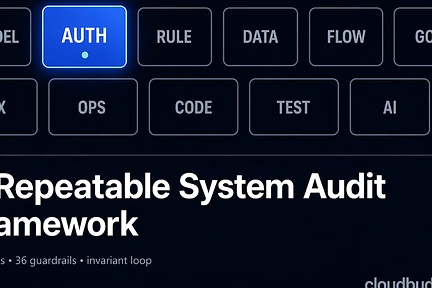
A Repeatable System Audit Framework for Production Software
A repeatable framework for auditing a SaaS codebase at scale. A set of audit tracks you select and adapt to your system, an invariants loop that stops regressions, and a verification cycle that makes each audit cheaper than the last. One recent application surfaced hundreds of findings and promoted 36 invariants to code-level guardrails.
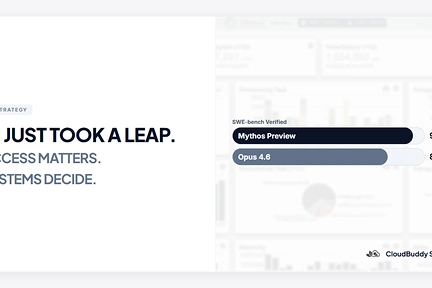
AI Just Took a Leap. Access Is Becoming a New Advantage.
Anthropic released Mythos Preview to a closed group of organizations. The capability leap is real, but the access model may matter just as much. As AI shifts from an equalizer to a gated advantage, the teams that win will be the ones that can turn that capability into working systems.
Claude Code Leaked. I Looked Under the Hood.
Claude Code CLI accidentally exposed part of its codebase. I pulled the package and looked under the hood. The direction is clear: AI agents are becoming systems.

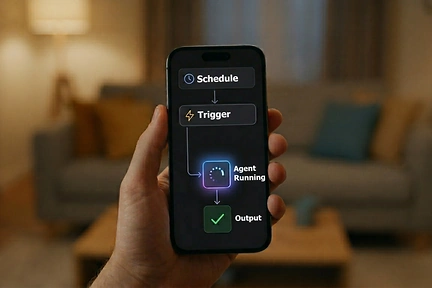
I Rebuilt My Company Site From My Phone (At the Gym)
What it actually looks like to work with remote AI agents. What worked, what didn't, and how Claude Dispatch compares to our custom AI tools.